



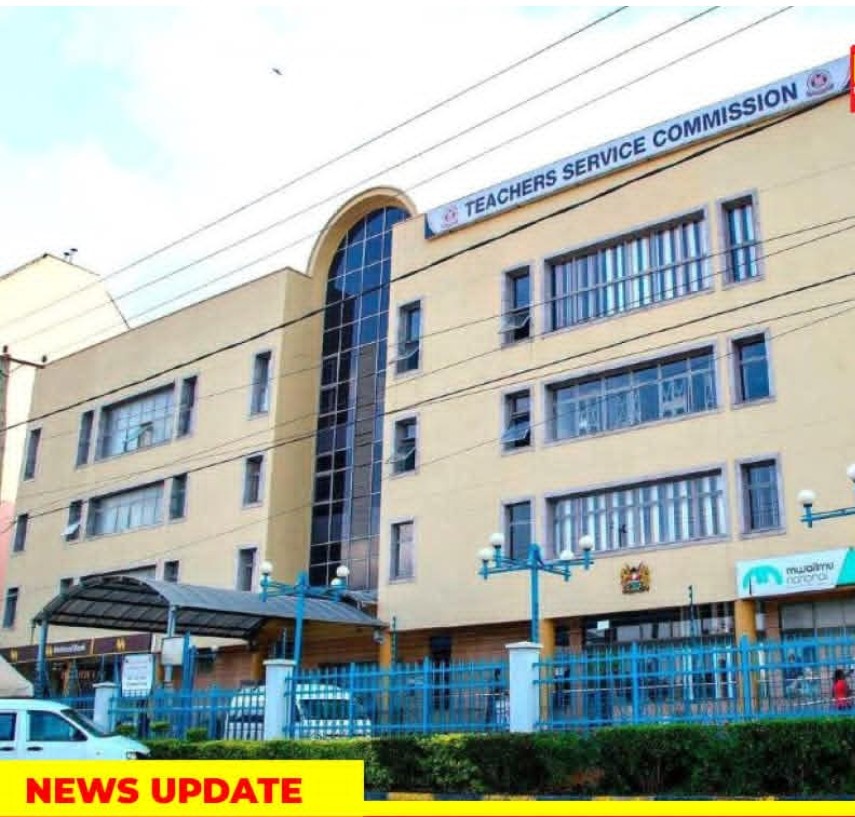

TSC Receives Sh33.57 Billion from Treasury in July
- The Teachers Service Commission (TSC) received Sh33.57 billion in recurrent exchequer funding from the National Treasury in July 2026, placing the commission among the biggest beneficiaries of government funding released during the first month of the 2026/27 financial year.
- Treasury records show that TSC had received exactly Sh33,571,866,660.80 by July 31, 2026. The allocation highlights the commission’s central role in financing Kenya’s education sector, particularly in meeting recurrent expenses such as teachers’ salaries and other employment-related costs.
- The TSC July 2026 allocation was higher than the amounts released to several other major government institutions during the same period.
- The State Department for Basic Education received Sh23.55 billion, while the Ministry of Defence was allocated Sh19.12 billion. The State Department for Higher Education and Research received Sh17.76 billion, while the National Police Service received Sh9.57 billion.
- Other major recurrent allocations included Sh5.65 billion for the State Department for Internal Security and National Administration, Sh5.36 billion for the National Intelligence Service and Sh4.97 billion for the State Department for Medical Services.
TSC Still Faces a Sh36.3 Billion Funding Deficit
- Despite receiving a significant amount in July, TSC continues to face a major financial shortfall in the 2026/27 financial year.
- According to Treasury’s Education Sector Report, the commission requires approximately Sh460.63 billion to fully finance its programmes and operations. This amount includes around Sh458.72 billion for recurrent expenditure and Sh1.91 billion for development expenditure.
- However, the approved allocation for TSC stands at approximately Sh424.3 billion, leaving the commission with an estimated Sh36.3 billion funding gap.
- The deficit means that some planned programmes and employment-related obligations may face financial pressure unless additional resources are provided during the financial year.
- TSC is responsible for managing the teaching service, including teacher recruitment, deployment, remuneration and career progression. With teachers’ salaries accounting for a large portion of its budget, the commission requires substantial and predictable funding to maintain smooth operations across the country’s public schools.
READ ALSO:TSC Warns Teachers Over Social Media Misconduct as Disciplinary Action Looms
Acting Allowances Remain Affected by Budget Constraints
- One of the areas affected by the TSC funding gap is the payment of acting allowances to teachers who temporarily take up higher administrative responsibilities.
- Teachers may be assigned acting roles when serving as principals, deputy principals, headteachers or in other positions before substantive appointments are made. TSC had estimated that approximately Sh2.2 billion would be required to support the payment of acting allowances during the 2026/27 financial year.
- A shortage of funds in this area could affect the commission’s ability to fully finance such obligations. Acting allowances are important because teachers performing additional administrative responsibilities often take on duties beyond their substantive job positions.
- The issue is also linked to wider concerns about staffing shortages and delays in filling leadership positions in schools. Adequate funding could help ensure that teachers who take on additional responsibilities are compensated according to applicable regulations.
Funding Pressure on JSS Intern Teachers Transition
- The TSC budget constraints are also being felt in the planned transition of Junior Secondary School (JSS) intern teachers to permanent and pensionable employment.
- TSC had requested approximately Sh7.2 billion to facilitate the employment transition of 20,000 JSS intern teachers. However, about Sh4.9 billion was provided, leaving an estimated shortfall of Sh2.3 billion.
- The transition of intern teachers has remained an important issue in the implementation of Junior Secondary School education under the Competency-Based Education system.
- Converting teachers from internship arrangements to permanent and pensionable terms could provide greater employment security and stability in schools. However, the funding gap means that the availability of adequate resources remains crucial to the successful implementation of the programme.
- The situation demonstrates the broader challenge facing the government as it attempts to expand access to education while managing rising public expenditure requirements.
July Allocation Does Not Provide Programme-by-Programme Details
- Although TSC received Sh33.57 billion in July, the Treasury statement identified the amount broadly as recurrent exchequer funding.
- The records did not provide a detailed programme-by-programme breakdown showing exactly how the funds were earmarked across the commission’s various activities.
- Recurrent funding generally supports the day-to-day operations of public institutions. For TSC, a significant portion of recurrent expenditure is associated with personnel costs and the administration of the teaching service.
- A detailed breakdown of expenditure would provide a clearer picture of how available resources are distributed among teachers’ salaries, allowances, recruitment, administrative operations and other programmes.
Government Releases Sh121.58 Billion for Consolidated Fund Services
- During July, the government also released substantial amounts for Consolidated Fund Services.
- Public debt servicing received approximately Sh113.75 billion, while a further Sh7.83 billion was allocated towards pensions and gratuities.
- This brought the total allocation to Consolidated Fund Services to approximately Sh121.58 billion during the month.
- The large amount committed to debt servicing and pensions illustrates the pressure facing the national budget. As government resources are shared among debt obligations, salaries, education, healthcare, security and development programmes, public institutions may continue competing for limited financial resources.
Government Records Sh367.34 Billion in July Receipts
- The government recorded total receipts of approximately Sh367.34 billion during July 2026.
- Tax revenue remained the biggest source of government income, contributing around Sh195.30 billion. Domestic borrowing generated approximately Sh138.25 billion, while non-tax revenue contributed about Sh4.57 billion.
- Other domestic financing accounted for roughly Sh23.35 million. Treasury records for July did not indicate any receipts from external loans and grants.
- The government ended the month with an exchequer balance of approximately Sh52.23 billion.
What the TSC Funding Gap Means for Teachers
- The Sh36.3 billion TSC funding gap is likely to remain an important issue throughout the 2026/27 financial year.
- Adequate financing will be necessary to support teacher employment, salaries, promotions, acting allowances and the transition of JSS intern teachers to permanent and pensionable terms.
- As the government continues implementing education reforms, pressure on the TSC budget could increase due to the growing demand for teachers and school administrators.
- Future supplementary budgets or additional Treasury allocations could therefore play an important role in addressing some of the commission’s financial needs.
- For teachers, especially those awaiting employment, confirmation from internship programmes or compensation for acting responsibilities, the availability of additional funding could directly influence the pace at which some programmes are implemented.
- The TSC July 2026 allocation of Sh33.57 billion provides important financial support at the beginning of the new financial year. However, with the commission facing an estimated Sh36.3 billion funding deficit, questions remain about how TSC will finance all its planned programmes and obligations in the months ahead.
TSC July 2026 allocation