



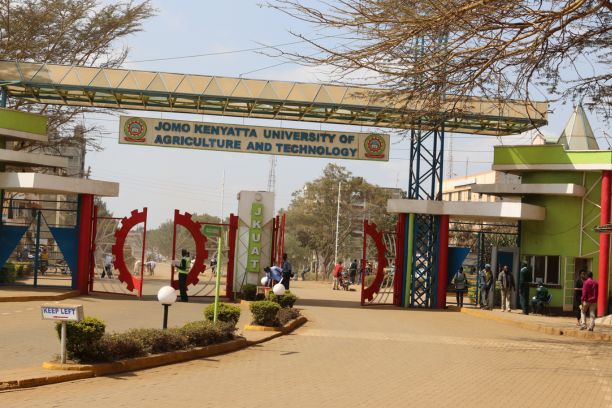

JKUAT Online Courses Through SODeL: Programmes, Fees, and Application Guide
The Schools of Open, Distance and eLearning or SODeL for short, at Jomo Kenyatta University of Agriculture and Technology is the place to go if you’re looking to earn a fully online degree.
This online initiative was born out of the university’s Continuing Education Programme which started way back in 1996, catering to self-sponsored students who just couldn’t make it into the regular programme via the Kenya Universities and Colleges Central Placement Service.
How the SODeL System Works
Each of the SODeL courses consists of a bunch of modules or units which are uploaded to the university’s Learning Management System.
You then download the notes, take online quizzes, and submit your assignments all through the same system.
And the really great thing is that you can pace yourself as you go along – the number of units you successfully complete in each semester determines how quickly you finish the course.
Studying through SODeL offers students a pretty nice bit of flexibility – provided you stick to a bit of a rigid schedule – which means that you can complete a programme in roughly half the time that it would take on campus. JKUAT hasnt really gone for a fast track option, though.
One thing you should know is that exams are held three times per year, in April, August and December, and are taken fully online through the same Learning Management System. This is a big change from the old days when you had to actually sit in a physical room for your exams.
Available Programs and Qualifications
Programs on the SODeL are grouped into 4 different levels – each one leading to a totally recognised JKUAT qualification that carries just as much weight as their on-campus equivalents.
Certificate Programs
- Certificate in Information Technology (CIT)
- Certificate in Purchasing and Supplies Management
Diploma Programs
- Diploma in Information Technology (DIT)
- Diploma in Purchasing and Supplies Management (DPSM)
- Diploma in Business Administration (DBA)
Degree Programs
- Bachelor of Science in Procurement & Contract Management
- Bachelor of Business Information Technology (BBIT)
- Bachelor of Commerce (BCOM)
- Bachelor of Science in Information Technology (BSc IT)
- Bachelor of Human Resource Management (BHRM)
Masters Programs
- MSc in Computer Systems
- Masters in Research Methods
- Master of Business Administration (MBA)
- MSc in ICT Integration in Education and Instructional Design
- MSc in Leadership and Governance
- MSc in Project Management
- MSc in Strategic Management
- MSc in Human Resource Management
- MSc in Procurement & Logistics Management
- MSc in Finance
- MSc in Finance and Accounting
- MSc in Business Information Technology
Keep in mind that JKUAT can change the programs they offer at any time, so if you’re interested in joining you’ll need to check out the SODeL website for the low-down on what’s currently on offer before you apply.
Getting In
Entry requirements vary, and it really depends on the level of study you’re looking to take:
- Certificate in Information Technology: You’ll need a KCSE mean grade of at least a C- (minus)
- Certificate in Purchasing and Supplies Management: A mix of studying and good grades – KCSE mean grade of at least D+ (plus) is required
- Diploma in Information Technology: A decent set of grades behind you – KCSE grade of C (plain) with at least C- in Maths and English is needed, or a credit pass in a relevant JKUAT IT certificate is okay too
- Diploma in Business Administration & Diploma in Purchasing & Supplies Management: KCSE mean grade of C- with at least C- in Maths and English is the way to go, or equivalent KCE or certificate-level qualification will be looked at
- Bachelor’s degree programmes: The usual university requirements will apply – JKUAT and KUCCPS have set their standards high
- Master’s degree programmes: A solid foundation behind you – a relevant Bachelor’s degree with at least upper second-class honours is needed, or lower second-class honours plus 2-3 years of post-graduation work experience will also be considered
You’ll need to submit copies of your academic certificates, result slips, and your national identity card to apply – but if you’re looking to do a Master’s programme you’ll also need to send in your full academic transcripts. Foreign applicants will need a letter of accreditation from Kenya’s Commission for University Education to sort out.
Fees
We charge our SODeL fees per semester and they vary from one course to another, from one year of study to another, and even by the number of units you take – but here are some rough estimates of what you’ll be paying:
| Programme | Units | Approx. Fee Per Semester (KES) |
|---|---|---|
| Certificate in Information Technology | 7 | 43,215 (Year 1 only) |
| Diploma in Information Technology | 25 | 33,423 – 42,590 |
| Diploma in Purchasing & Supplies Management | 24 | 27,693 – 36,141 |
| BCOM / BPCM / BHRM | 56 | 50,923 – 61,808 |
| Bachelor of Business Information Technology | 56 | 50,923 – 61,808 |
| BSc Information Technology | 65 | 48,404 – 65,056 |
| MSc Computer Systems | 12 | 80,000 – 102,500 |
| MSc Research Methods | 15 | 60,500 – 98,000 |
| MSc Finance & Accounting | 19 | 55,250 – 91,000 |
| MBA / MSc HRM / MSc Strategic Mgmt / MSc Project Mgmt / MSc Procurement & Logistics | 18 | 55,250 – 91,000 |
These figures are just a rough guide. Fees are subject to change from one intake to another, and the actual amount depends on the specific units you’re registering for. Once you’ve been admitted, you can log in to the JKUAT student portal to get a personalized look at your fees, or if you’re having trouble just email elearning@jkuat.ac.ke and someone’ll sort you out.
Application fees – these are non-refundable, so make sure you’re committed to following through with the application process. You can pay these via M-PESA as follows:
- Certificates: KES 500
- Diplomas: KES 1,000
- Both degrees and master’s: KES 1,500
How to Apply
So, the online application process works like this:
- To get started, go to the SODeL website and launch the online application form – that’s the first step in the process.
- Once you’re there, just pick the programme you’re going for, and fill in your personal and academic details.
- Next, scan or take a photo of your ID, certificates and result slips.
- You’ll then need to pay the application fee via M-PESA – just go to Pay Bill, type in the SODeL business number, use your ID number as the account number and enter the correct amount for your programme level.
- Save the transaction code and use that later on.
- Go back to the application form, enter the transaction code, and upload your scanned documents.
- Once that’s done, just submit the form and wait for confirmation from the SODeL admissions team.
A word of warning: do check the current paybill and account number before you pay – you can find this on the SODeL application page or by giving the admissions line a call.
Student Portal and LMS
Once you’ve been accepted, you’ll be using two different systems:
JKUAT Student Portal – this is where you’ll be doing everything that’s admin-related, like registering for units, checking your balance, downloading your exam card and looking at your provisional results.
SODeL Learning Management System (LMS) – this is where the actual studying happens – you’ll access this through the SODeL website. Here you’ll be able to download notes, watch video lessons, take quizzes and submit assignments.
So, your first time logging in to the student portal:
- Your username is the first bit of your student email (e.g. if it’s jane.mary@students.jkuat.ac.ke, your username is just the jane.mary@students part)
- The default password is your registration number – but make sure to change it to something else straight away
- If you’ve had any trouble finding your student email or password, get in touch with the support desk or email admin@students.jkuat.ac.ke.
Key Stuff to Know as a New Student
New students to SODeL should be aware of these things:
- You need to attend an orientation session – either in person, or virtually – where you’ll get signed up for units and get introduced to the SODeL system.
- Make sure to get your units registered and pay your fees before you start accessing the LMS.
- All assignments should be submitted online by the given deadlines.
- Get enrolled in the students’ noticeboard on the LMS – that’s where you’ll find exam timetables, results and semester updates.
- Don’t forget to keep yourself registered every semester – otherwise you won’t be officially a student.
Contact Details
The School of Open, Distance and eLearning is pretty easy to get a hold of – just try these:
- My address is: Where you’ll find us – School of Open, Distance and eLearning, JKUAT Main Campus, Juja – right along Thika Superhighway
- Drop a letter in the post: P.O. Box 62000-00200, Nairobi will get to us just fine
- Email’s the way to go: try either elearning@jkuat.ac.ke or admissions.sodel@jkuat.ac.ke
- Ringing in from the switchboard: We can be reached on 067-5870001 to 067-5870005
- For admissions and registration: ring 1761 if you need to speak to one person, 1762 if you need to speak to the other
- Got a question about an exam? 1762 will help if you’re a undergrad – 1761 if you’re a postgrad
- Fees – we can sort you out: 1413, 1412, or 1757 – give one of those a ring
Final Thoughts
JKUAT’s online courses through SODeL still make it a great option for anyone in Kenya or beyond who wants a proper uni degree – they’re accessible, with clear steps to follow and a dedicated student portal and LMS system, so getting started is mostly just a matter of checking out what’s on offer, gathering all the necessary paperwork & filling out the application online. And the flexibility is great – work, family, study – all without having to up sticks or sit in lectures all day.