



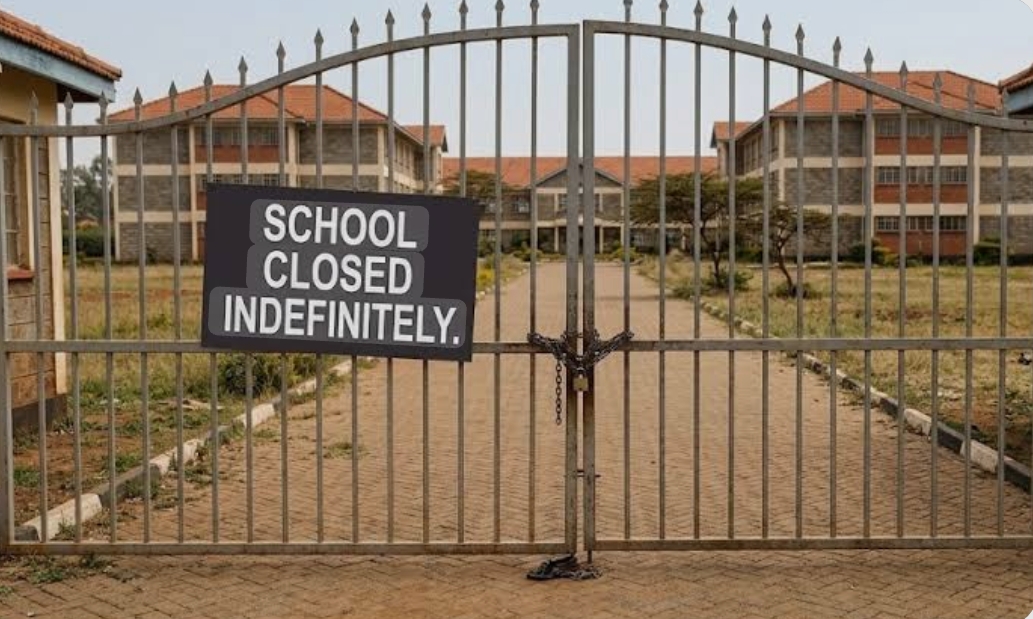

schools with no Grade 10 learners in Kenya
Kenya’s transition to Grade 10 under the Competency-Based Education (CBE) system has created a new challenge for the Ministry of Education, with hundreds of secondary schools struggling to attract learners. A total of 330 schools reportedly received no Grade 10 learners, while another 2,400 schools admitted fewer than 20 students.
The development has raised questions about the future of schools with extremely low enrolment, particularly as the government prepares for the next group of learners to transition from Junior School to Senior School.
Although the government has not announced the immediate closure of the 330 schools, Education Cabinet Secretary Julius Ogamba has previously indicated that schools which consistently fail to attract adequate numbers of learners could face interventions such as restructuring, merging or, in extreme cases, closure.
330 schools received no Grade 10 learners
The most significant figure in the emerging school enrolment debate is the 330 secondary schools that did not receive a single Grade 10 learner during the first transition to Senior School.
Education CS Julius Ogamba disclosed the figure while appearing before the Senate. He explained that Kenya had approximately 2.4 million available Senior School places, compared with about 1.13 million Grade 9 learners moving into Grade 10.
This means the country had more Senior School spaces than learners. The problem was therefore not a shortage of schools but the uneven distribution of learners across institutions.
According to the CS, the learner-choice system played an important role in the situation. Under the new CBE structure, learners were allowed to select preferred schools, pathways and subject combinations.
As a result, schools with strong reputations, better-known facilities, boarding opportunities and attractive subject combinations received high numbers of applications, while some less popular institutions struggled to attract students.
Another 2,400 schools have fewer than 20 learners
The problem extends beyond the 330 schools that received no Grade 10 learners.
Government figures presented by the Education CS showed that approximately 2,400 other schools admitted fewer than 20 Grade 10 learners.
This is significant because such institutions may have classrooms, laboratories, teachers and other facilities designed to serve considerably larger populations.
The situation could place additional pressure on schools because government funding and the ability to sustain school programmes are closely linked to learner numbers.
For schools with extremely low enrolment, maintaining infrastructure and meeting operational costs could become increasingly difficult.
The figures therefore put the total number of schools with either zero or fewer than 20 Grade 10 learners at about 2,730 institutions.
However, these figures should not be interpreted to mean that all 2,730 schools are facing automatic closure. The Ministry has been reviewing the situation and considering what should happen if low enrolment becomes a persistent trend.
Why are some schools struggling to attract Grade 10 learners?
Several factors could explain the wide differences in enrolment.
One major factor is parent and learner preference.
Families naturally tend to look for schools they believe will provide better academic, sporting, technological and career opportunities. Schools with established reputations can therefore attract learners from a wider geographical area.
The introduction of the three Senior School pathways has also changed the way families look at schools.
Learners moving to Grade 10 can pursue areas broadly grouped into STEM, Social Sciences, and Arts and Sports Science. Consequently, a school offering limited pathways may struggle to attract learners whose interests do not match the programmes available.
Infrastructure is another important consideration.
Parents may compare schools based on laboratories, libraries, ICT facilities, boarding facilities, sports grounds, teaching resources and previous academic performance.
This can create a cycle in which popular schools continue attracting more learners while schools with weaker facilities continue losing potential students.
Will the 330 schools be closed?
This is one of the biggest questions surrounding the Grade 10 enrolment crisis.
At the moment, the 330 schools should not be described as schools that have already been scheduled for closure.
Instead, their future depends partly on whether the low enrolment continues.
The Ministry has indicated that it would need to examine the situation and determine how institutions with persistently low numbers should be handled.
Possible measures could include school mergers, restructuring, teacher redistribution, introduction of additional pathways, specialisation or repurposing of institutions.
Closure could become an option for schools that repeatedly remain non-viable, but it should not be presented as an automatic consequence of receiving no Grade 10 learners in the first transition.
This distinction is important for parents, teachers and communities whose schools have been affected.
Why school closure could affect communities
Closing a school is not simply an administrative decision.
Many rural and day secondary schools are located within communities where families depend on nearby institutions. For some parents, sending a child to a distant school may create additional transport and accommodation costs.
Schools also represent years of government and community investment.
Classrooms, laboratories, teachers’ houses, libraries and other facilities may have been constructed through public funds or community contributions.
A closure or merger could therefore affect not only learners but also teachers, support staff and the wider communities surrounding the institutions.
The government will consequently need to balance efficient use of public resources with the need to maintain access to education.
The next Grade 10 transition could be decisive
The next transition to Grade 10 is likely to provide a clearer picture of whether the current problem is temporary or structural.
The first Grade 10 intake took place during a major period of transition from the old 8-4-4 system to CBE. The unusual structure of the transition created additional capacity in some schools.
The next intake could therefore show whether schools that received few or no learners can attract students when the system settles.
If the same institutions again receive very small numbers, pressure for government intervention is likely to increase.
On the other hand, schools that improve their facilities, expand relevant pathways and communicate their programmes effectively could potentially attract more learners.
Government faces difficult decisions
The emerging Grade 10 enrolment pattern presents the Ministry of Education with a difficult balancing act.
On one side is the need to ensure that public resources are used efficiently. Maintaining a school with only a handful of learners can be expensive compared with supporting an institution serving hundreds of students.
On the other side is the constitutional importance of ensuring that Kenyan children can access education without unreasonable geographical or financial barriers.
The solution may therefore not be to close every school with low enrolment.
Instead, the government could first examine why individual schools are unpopular.
Some may have inadequate facilities. Others may offer limited pathways. In other cases, the problem may be location, transport, historical performance or lack of information among parents and learners.
Addressing these issues could help some institutions recover without being merged or closed.
What the 330-school figure means for Kenya’s education system
The situation involving the 330 schools with zero Grade 10 learners and 2,400 with fewer than 20 learners is more than an enrolment statistic.
It is an early indication of how learner choice under CBE is beginning to reshape Kenya’s secondary education landscape.
The new system gives learners greater opportunity to pursue pathways aligned with their interests. However, the government must also ensure that schools across the country remain viable and capable of delivering quality education.
The coming years will therefore be important.
If low enrolment continues in the affected institutions, Kenya could see a new phase of school mergers, restructuring and possible closures. If enrolment improves, however, the current situation could prove to have been largely a consequence of the unusual first transition.
- For now, the 330 schools that received no Grade 10 learners remain operational, but their future will depend heavily on enrolment trends, government policy and the ability of individual schools to attract learners.
The central question facing the Ministry is no longer simply how many Senior School places Kenya has. It is how those places can be distributed fairly and sustainably so that classrooms across the country are filled with learners.
READ ALSO:TSC Promotion Interviews to Begin September 8 as 34,016 Teachers Compete for Career Advancement
schools with no Grade 10 learners in Kenya