



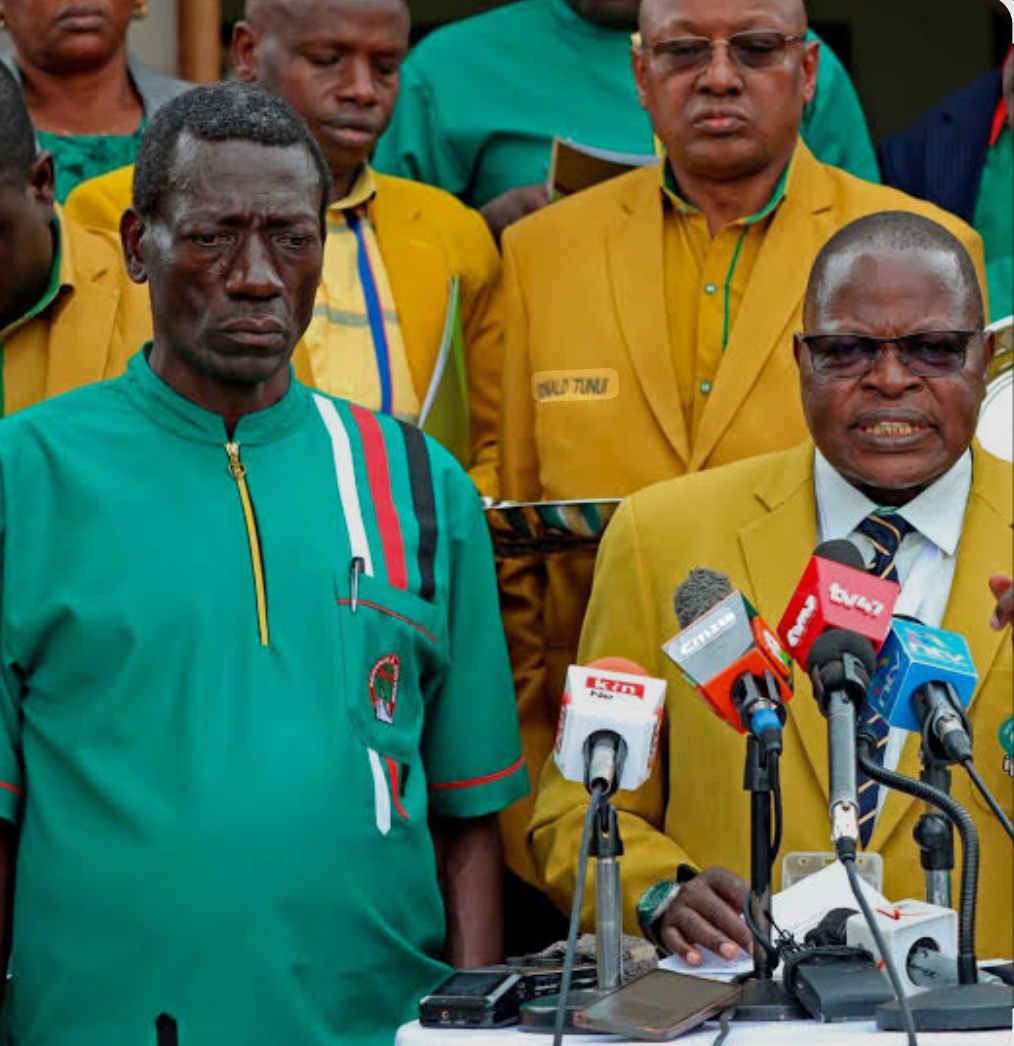

KNUT vs KUPPET JSS comprehensive school
Kenya’s education sector is facing another major debate over the future of Junior Secondary Schools (JSS), with the country’s two largest teachers’ unions taking sharply different positions on how the institutions should be managed.
The disagreement has emerged as Parliament conducts public participation on the Basic Education Bill, 2026, a proposed law that seeks to overhaul the country’s basic education framework.
At the centre of the dispute is a crucial question: Should Junior Secondary Schools remain part of a comprehensive school alongside primary education, or should JSS operate as autonomous institutions with their own leadership and governance structures?
Recent public participation forums have exposed a clear divide between the Kenya National Union of Teachers (KNUT) and the Kenya Union of Post-Primary Education Teachers (KUPPET).
KNUT backs the comprehensive school model
KNUT has supported the proposed comprehensive school arrangement, arguing that keeping primary and junior school sections together could provide continuity and make better use of existing infrastructure and resources.
The union’s position is broadly that the current arrangement can work if it is properly strengthened and supported.
Under the proposed model, a comprehensive school would bring primary and junior school learners within one institutional structure.
Reports from the ongoing public participation indicate that KNUT has argued against creating two separate centres of power within schools that already share facilities.
The union has also proposed a leadership structure in which one principal would oversee the institution, supported by deputies responsible for the primary and junior school sections.
This approach is intended to preserve administrative continuity while giving the JSS section a designated leader.
The comprehensive school proposal is also supported by the Kenya Primary School Heads Association (KEPSHA), which has pointed to continuity and more efficient use of school resources as some of the potential advantages.
KUPPET wants JSS to become autonomous
KUPPET has taken the opposite position.
The union wants references to the comprehensive school model removed from the Basic Education Bill and Junior Secondary Schools recognised as autonomous institutions.
During public participation, KUPPET representatives have argued that JSS should have its own administration, leadership and governance structures rather than operating under primary-school management.
The union’s argument is that sharing a physical compound does not necessarily mean that two education levels should have the same administration.
KUPPET has particularly raised concerns about the representation of JSS in Boards of Management, teacher deployment, allocation of resources and the professional identity of junior secondary teachers.
The debate is therefore not simply about whether primary and JSS learners can occupy the same compound. It is also about who makes decisions, who controls resources and how teachers are managed.
Kenya News Agency reported on September 19 that KUPPET was calling for JSS to have autonomous administrative structures, with the union arguing that junior secondary should not be treated simply as an extension of primary education.
Why the Basic Education Bill matters
The Basic Education Bill, 2026, is designed to replace the existing legal framework governing basic education and align it with the country’s Competency-Based Education reforms.
One of its significant proposals is to give legal recognition to the comprehensive school arrangement, under which primary and junior school education would operate within a unified institution.
The proposed arrangement has therefore become one of the most closely watched sections of the Bill by teachers and education stakeholders.
The Bill was published on July 24, 2026, and the National Assembly’s Departmental Committee on Education has been conducting public participation across different parts of the country. The exercise is scheduled to run from September 14 to September 25.
The battle is bigger than school leadership
For teachers, the disagreement goes beyond the title of the school head.
The structure eventually adopted could influence several issues affecting JSS teachers, including deployment, promotion, professional identity, leadership opportunities, resource allocation and representation in school management.
The screenshot shared by Teacher’s Welfare in Kenya highlights concerns that more than 80,000 JSS teachers working in thousands of schools could be caught between different administrative structures.
This is particularly significant because JSS teachers include educators with different professional backgrounds, including teachers who entered the junior secondary system through different training and deployment routes.
KUPPET’s position is that these teachers require an administrative structure that recognises the distinct nature of junior secondary education.
KNUT, on the other hand, argues that splitting institutions could create unnecessary duplication and place additional pressure on already limited education resources.
What teachers and parents should watch
The current disagreement does not mean that a final decision has already been made.
The Basic Education Bill is still going through the parliamentary process, and public participation is specifically intended to allow teachers, parents, school managers and other members of the public to make submissions before Parliament considers the proposals further.
This means the final structure could change after Parliament considers the views presented during the hearings.
Teachers should therefore be cautious about social media reports suggesting that JSS has already been permanently separated from primary schools or that the comprehensive school model has already become law.
At present, the issue remains part of the legislative debate.
Public participation could shape the final decision
The disagreement between KNUT and KUPPET demonstrates just how significant the Basic Education Bill could be for Kenya’s education system.
KNUT is essentially arguing for one institution with differentiated responsibilities, while KUPPET wants JSS to have a separate institutional identity and administration.
Both positions raise important questions about the future management of schools.
A unified structure could potentially make it easier to share facilities and resources. However, opponents argue that a single administration could create conflicts over resource allocation, teacher management and professional representation.
The parliamentary committee will have to weigh these competing arguments before the Bill progresses through the legislative process.
What happens next?
For now, the debate is far from over.
The ongoing public participation gives teachers and other stakeholders an opportunity to put their concerns on record before Parliament moves to the next stages of considering the proposed legislation.
The eventual decision could have long-term consequences for JSS teachers, primary school teachers, headteachers, principals, Boards of Management, parents and millions of learners.
For teachers following the debate, the biggest question remains unanswered: Will Kenya maintain the comprehensive school model, or will Junior Secondary Schools eventually receive independent administrative structures?
The answer will depend on the views collected during public participation and the subsequent parliamentary process.
For now, KNUT and KUPPET are firmly on opposite sides of one of the most important education policy debates facing Kenya’s JSS system.
KNUT vs KUPPET JSS comprehensive school