



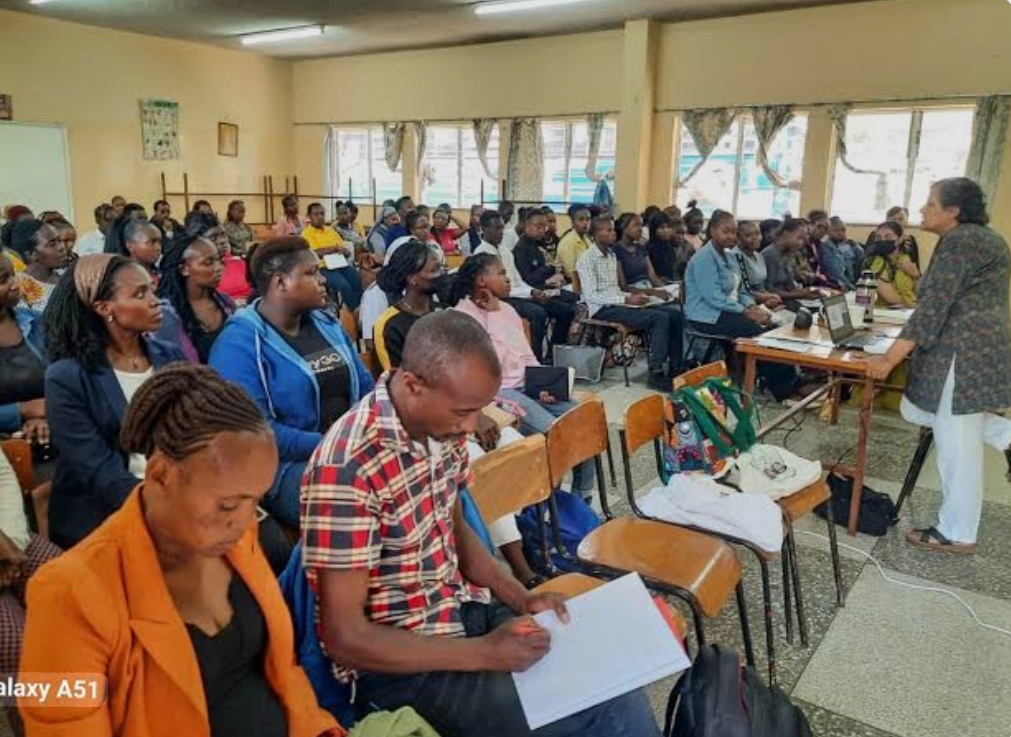

CEMASTEA certification deadline for JSS STEM teachers
By Elimu News Update | September 2, 2026
Thousands of Junior School teachers who participated in a recent STEM training programme have been given a deadline to complete a key requirement before they can receive their certification.
The Centre for Mathematics, Science and Technology Education in Africa (CEMASTEA) has set September 15, 2026, as the deadline for affected Junior School Mathematics and Integrated Science teachers to complete a school-based induction exercise linked to their certification.
The directive affects approximately 7,000 Junior School STEM teachers who participated in training on the use of virtual laboratories earlier this year.
CEMASTEA gives teachers September 15 deadline
According to a circular dated September 1, 2026, CEMASTEA said teachers who attended the virtual laboratory training are required to complete the outstanding school-level activity before their certification can be finalised.
The teachers underwent the training between June 24 and June 26, 2026. The programme was designed to equip them with practical skills for using virtual laboratories in teaching Mathematics and Integrated Science at Junior School level.
However, CEMASTEA has indicated that a significant number of the trained teachers have not yet completed the required cascading exercise.
Teachers who are yet to meet the requirement have therefore been urged to act before the September 15 deadline.
What the 7,000 teachers are required to do
The certification requirement goes beyond simply attending the initial CEMASTEA training.
Each trained teacher is expected to return to their school and induct at least three other STEM teachers on the use of virtual laboratories.
This approach is intended to spread the knowledge gained during the national training programme to more teachers within individual schools.
The trained teachers are expected to conduct the school-based induction with the involvement of their school administration.
After completing the exercise, evidence of the induction must be prepared and submitted to CEMASTEA.
Attendance register required
One of the most important documents required from the trained teachers is an attendance register showing the colleagues who participated in the school-based induction.
CEMASTEA has directed the affected teachers, through their school heads, to submit a scanned copy of the completed attendance register before the September 15 deadline.
The prescribed attendance-register template is expected to be used when documenting the induction exercise.
Teachers should therefore ensure that the required information is accurately recorded and that the document is submitted within the specified period.
Why virtual laboratories matter in Junior School
The training comes at a time when Kenya is placing greater emphasis on practical and competency-based learning.
CEMASTEA’s virtual laboratory initiative is aimed at helping teachers integrate digital practical learning into Mathematics and Integrated Science lessons.
Virtual laboratories can provide learners with opportunities to explore scientific concepts and carry out simulated practical activities using digital platforms.
This can be particularly useful in schools where access to fully equipped physical laboratories remains a challenge.
The initiative is therefore expected to complement existing physical laboratory facilities rather than completely replace them.
A July report on the programme noted that virtual laboratories are intended to improve access to practical learning and help learners understand scientific concepts more effectively.
The cascade training model
The requirement for each trained teacher to induct at least three colleagues is part of a wider cascade training approach.
Instead of limiting the benefits of the programme to the 7,000 teachers who attended the central training, CEMASTEA is using the trained teachers as resource persons within their respective schools.
If every trained teacher successfully reaches three colleagues, the potential reach of the programme could extend to thousands of additional STEM educators.
This could help schools build internal capacity in the use of digital resources and reduce dependence on external training sessions.
It also gives teachers an opportunity to share practical skills with colleagues who may not have participated in the original June training.
Certification now depends on completing the requirement
For teachers who attended the June training but have not yet conducted the required induction, the latest directive is particularly important.
Attending the three-day training alone does not appear to be sufficient for completing the certification process. The school-based cascading activity and submission of evidence are also part of the requirements.
Teachers should therefore avoid waiting until the final days before the deadline.
School heads and other relevant education officials can also play an important role by helping affected teachers organise the induction sessions and ensure the necessary documentation is completed.
What teachers should do before September 15
Teachers affected by the directive should take the following steps:
1.Confirm that they participated in the June 24–26 CEMASTEA virtual laboratory training.
2.Identify at least three STEM teachers in their school for the induction exercise.
3.Conduct the required school-based induction on virtual laboratories.
4.Ensure all participating teachers are properly captured in the attendance register.
5.Use the prescribed CEMASTEA attendance-register template.
6.Scan the completed document clearly.
7.Submit the scanned attendance register to CEMASTEA through the designated channel before September 15, 2026.
The deadline is important because the documentation will provide evidence that the teacher has completed the required post-training activity.
A significant step in strengthening STEM education
CEMASTEA’s latest directive highlights the growing importance of continuous professional development for teachers implementing STEM education in Junior School.
The organisation describes its mandate as supporting continuous professional development for teachers in Mathematics and Science education through sustainable in-service training and school-based teacher support.
For the 7,000 teachers involved in the virtual laboratory programme, the immediate priority is now to complete the school-level induction and submit the required evidence.
With September 15, 2026 fast approaching, teachers who have not yet completed the exercise have limited time to meet the certification requirement.
The development is also likely to draw attention from Junior School teachers across the country because certification provides formal recognition of participation in the professional development programme.
Teachers should therefore check the instructions issued through their schools and relevant education officials and ensure that all required documentation is submitted within the stipulated timeframe.
Key details at a glance
Organisation: CEMASTEA
Affected teachers: About 7,000 Junior School Mathematics and Integrated Science teachers
Training: Virtual laboratories
Initial training dates: June 24–26, 2026
Certification requirement: Induct at least three other STEM teachers at school level
Required evidence: Completed attendance register
Deadline: September 15, 2026
CEMASTEA’s resource centre provides access to STEM education materials and institutional resources for educators.
READ ALSO:TSC Promotion Interviews to Begin September 8 as 34,016 Teachers Compete for Career Advancement
CEMASTEA certification deadline for JSS STEM teachers